Hello everyone!
We are back and trying to educate Cincinnati on arboriculture and tree health! I could not wait a whole month to post this one. Todays subject is a very sore one to me because of how common and NOT RIGHT it is. EVERY time i am out running bids throughout Cincinnati i notice the same thing— trees that have been topped. Big, healthy maples, oaks, and sycamores hacked straight through the scaffold branches (boughs , arterial leads).
I touched on this quickly in my last blog post… This infuriates me to no end. It is simple tree biology which EVERY arborist should understand inside and out. This does not stop the keyboard warriors and know-it-alls online from spreading false information… I see it and hear it all the time online. “They’ve been doing this for 100 years, Your arborist book isn’t a bible, i do this for clients all the time and they love it”… Just because something has been done for a long time doesn’t make it right, the 4th Edition ISA Arborist certification is the most up to date knowledge of arboriculture out there; collaborated on by multiple doctors, biologists, botanists, and then technically reviewed by dozens more. It kind of is the arboriculture bible… Also, clients do not always know what is best for trees. They might not “like it” when they are educated on what it does to the tree. That is where we come in and why we are trying to educate!
Please reach out to ANY certified arborist and you WILL get the same response backed by knowledge and experience… TOPPING TREES IS NOT HEALTHY FOR THE LONGEVITY OF TREES AND WILL EVENTUALLY LEAD TO THEIR DEATH.
If you’re not in the tree business, topping might look like a quick way to control growth or “reshape” a tree. But here’s the truth: topping is one of the worst things you can do to a tree.
At Queen City Arborists, we’re seeing more and more of it, and we want homeowners to know exactly why it’s bad—and what to do instead.
What “Topping” Really Means
Topping is when someone cuts back large scaffolding branches (sometimes referred to as boughs or arterial leads) to random stubs, usually trying to reduce the height or size of the tree. It’s quick, it’s cheap, and it’s almost always done by people who don’t understand tree biology.
They’ll tell you it’ll “help the tree grow back thicker” or “keep it under control.” But what it actually does is stress the tree, invite decay, and set it up for long-term failure.
Why Topping Hurts Trees
Here’s what’s really happening when a tree is topped:
The tree goes into survival mode. You’ve just removed a huge portion of its food-making canopy, so it panics and sends out weak, fast-growing shoots called “water sprouts.” These look like regrowth—but they’re brittle and poorly attached.
It opens the door for disease and rot. Large topping cuts expose the inner wood, allowing decay and insects to move in. Once rot starts, it’s hard to stop.
It destroys the tree’s natural structure. Trees are designed to balance their canopy and root system. Topping throws that balance off, making them more likely to split or fail in storms.
It shortens the tree’s lifespan. What might’ve been a strong, healthy tree for decades ends up dying within a few years.
I get why some homeowners go for it—it’s cheaper up front, and it looks “clean” right after it’s done. But fast forward a couple of years, and you’re looking at a disfigured, unhealthy tree that’s more expensive to fix or remove.
What to Do Instead
If you’re worried about a tree being too tall or spreading too wide, there are better options:
Crown reduction – Done by a trained arborist, this method selectively removes branches from the top and outer edges, reducing size while keeping the tree’s natural shape and structure intact.
Thinning and directional pruning – These techniques open the canopy, improve airflow, and guide future growth without damaging the tree.
Routine maintenance – Light trimming every few years keeps trees healthy and controlled without the shock of drastic cuts.
Proper pruning takes more skill and time—but it preserves the tree’s health, strength, and beauty.
What We’re Seeing in Cincinnati
We’ve seen topped trees all over the city lately—Anderson Township, Mt. Washington, Hyde Park, you name it. Sometimes it’s a homeowner trying to save money. Other times it’s a so-called “tree guy” that’s really just a guy with a saw.
Once it’s done, it’s done. You can’t undo topping. But you can save the next tree before it happens.
STAY AWAY FROM ANYONE ATTEMPTING TO SELL YOU ON THIS
If you’ve got a tree that’s getting too big for comfort, or if you’re worried about limbs near power lines or your house, call us. We’ll give you honest advice and show you how to keep your trees safe and healthy—no topping, no shortcuts.
Queen City Arborists does it the right way, every time. Protect your trees before someone ruins them trying to “reshape” them.
We have provided pictures below for your reference…
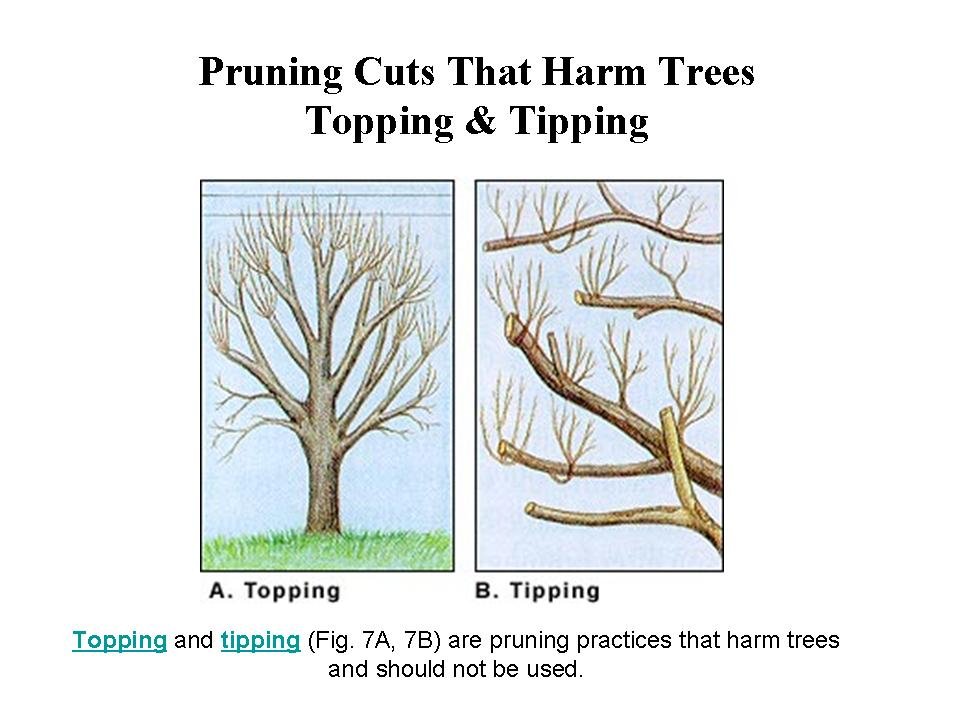
YOU WONT FIND A TEXTBOOK THAT SAYS IT’S HEALTHY…
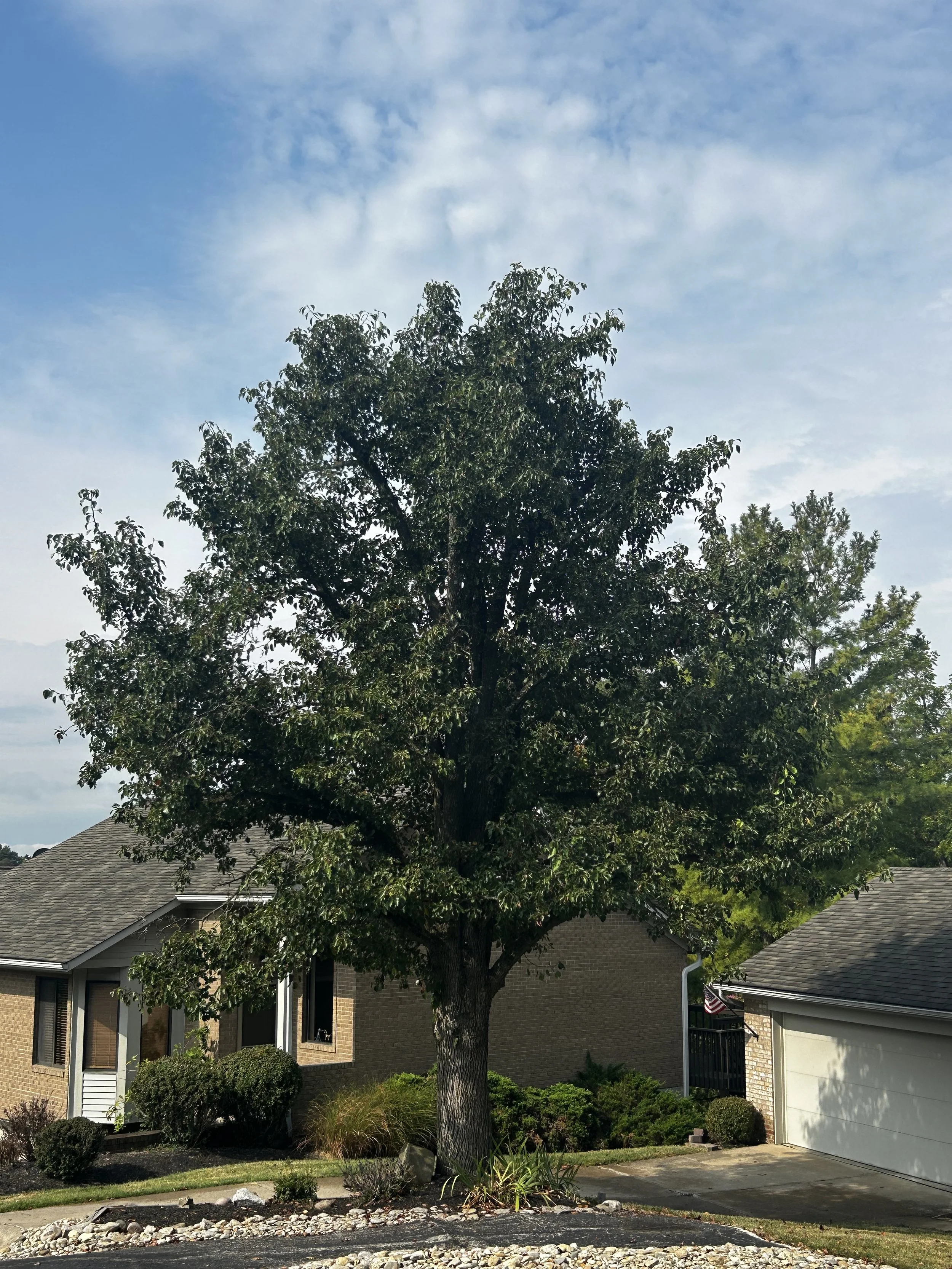
A TOPPED BRADFORD PEAR
